

Current Status
Not Enrolled
Enroll in this course to get access
Price
Ended
Get Started
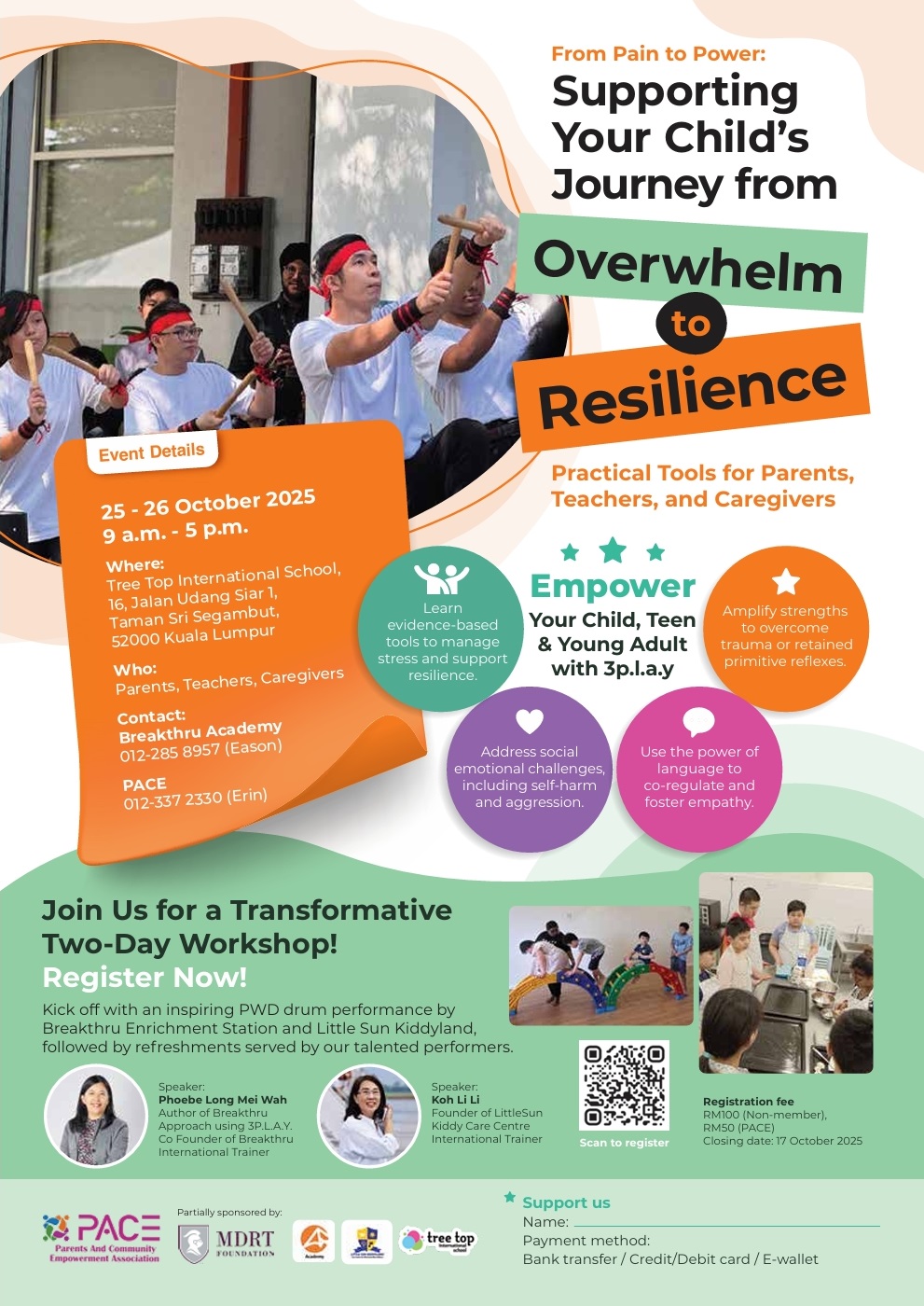
📅 Date: October 25-26, 2025
🕒 Time: 9:00am - 5:00pm
Registration Fee*:
MYR100 – Non Member; MYR50 – PACE Member
(*includes meals, materials & certificate)
Final Date to Register: October 17, 2025.
Late registration may incur an additional fee of RM 50.
- Create an account (if you do not have one yet) and Log-in.
- Sign-up here and pay the registration fee.
(Look out for the “Log-in to enroll” or “Take this course” at top right corner of this page to sign-up.)
Pain to Power: Supporting Your Child’s Journey from Overwhelm to Resilience
1. What is “Pain to Power” all about?
“Pain to Power” is a parent-focused training designed to equip caregivers with practical tools and emotional insight to support their children through difficult emotions—such as anxiety, anger, and overwhelm—and help them build emotional resilience. It bridges the gap between a child’s emotional struggles and the parent’s role in nurturing their growth and self-regulation.
2. Who is this training for?
This training is for parents, guardians, and caregivers of children and teens—especially those who are navigating emotional challenges, behavioral issues, or have experienced trauma or high stress. Educators and mental health professionals who support families may also benefit.
3. What age range of children does this apply to?
The core principles apply across age ranges but are most relevant to children between 5 and 18 years old, as it focuses on emotional development, self-regulation, and parent-child interaction strategies.
🧠 Content and Structure
4. What topics does the training cover?
We cover topics such as:
- Understanding the neuroscience of overwhelm
- The role of co-regulation in emotional healing
- How to respond vs react to your child’s distress
- Building trust and emotional safety
- Setting compassionate boundaries
- Practical scripts and tools for everyday parenting moments
5. What do you mean by “resilience”?
Resilience is a child’s ability to bounce back from stress, adversity, or failure. In this training, we explore how resilience isn’t about “toughing it out,” but rather about emotional flexibility, supportive connection, and having tools to process and recover from tough experiences.
🤝 Parent Involvement and Role
6. How can I help my child without fixing everything for them?
A key theme in the training is moving from fixing to supporting. We help parents understand how to hold space for their child’s emotions, validate their experience, and guide them toward problem-solving and self-trust—without taking over or minimizing their pain.
7. What if I feel overwhelmed myself?
That’s completely normal. Parenting from a regulated state is at the heart of the training, and we address your emotional triggers too. We provide tools for self-regulation, and ways to model emotional health so your child can mirror it.
💡 Practical Application
8. Is this training more theoretical or practical?
It’s a balance. While we ground the content in science and psychology, we focus heavily on real-world application—including scripts, reflective prompts, case studies, and role-play scenarios to help you bring the tools into daily life.
9. How long is the training and how is it delivered?
It’s 8-hour workshop 2 full-day in-person training, delivered through a mix of live sessions, recorded modules, and interactive exercises. It’s designed to be engaging, accessible, and empowering.
🧭 Results and Outcomes
10. What can I expect to gain from this training?
By the end of “Pain to Power,” you’ll have:
- A deeper understanding of your child’s emotional world
- Tools to stay calm and connected during emotional storms
- Strategies to foster resilience without shame or pressure
- More confidence in your role as a guide—not a fixer
11. Can this really help with tantrums, shutdowns, or anxiety?
Yes—because we get to the root of these behaviors. Instead of focusing on just managing the surface, we help you understand what’s driving the overwhelm and how to meet it with connection, not control. Over time, this reduces the intensity and frequency of emotional outbursts.
🤔 Objections / Concerns
12. What if my child refuses to talk to me?
That’s okay. This training is about changing the emotional climate—not forcing conversation. When you shift how you show up emotionally, your child will slowly begin to feel safer to open up. It’s about consistent signals of safety, not immediate results.
13. Is this approach too soft? What about discipline?
Not at all. This training emphasizes firmness with compassion. Discipline isn’t about punishment—it’s about teaching and guiding. We explore how to hold boundaries in ways that build respect and accountability, not fear.
- Complete the reflection section at below.
- Return to this course page
- Download the cert on top of page.
Course Content
From Overwhelm to Resilience Reflections
You don't currently have access to this content
